PhD Summer School “Sliding Mode Towards a Changing World”
Saturday 25 July 2026 to Monday 27 July 2026, University of Exeter, UK
The Control System Group at the University of Exeter has been awarded the honour of hosting the IEEE 18th International Workshop on Variable Structure Systems and Sliding Mode Control. This is the key event which brings together the sliding mode control community from around the world.
To maximise its reach and long-term impact, an intensive three-day Summer School will precede the Workshop (Saturday 25 July 2026 to Monday 27 July 2026), bringing together world-leading experts and the next generation of researchers, which are our PhD students. This Summer School will focus on the latest advances in sliding mode control theory, with clear application to critical challenges in decarbonisation, clean and sustainable energy, and transportation. Participants will learn how both established and emerging sliding mode techniques can be turned into practical, real-world solutions-enhancing performance, improving fault tolerance, enabling optimisation, and reducing costs.
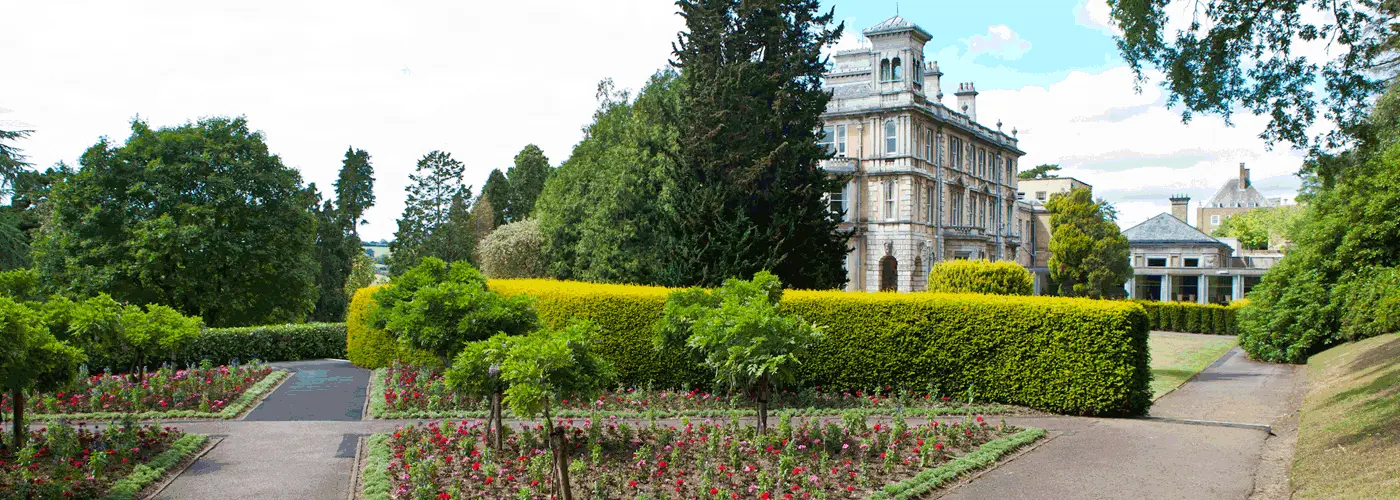
The event will be hosted in the prestigious Reed Hall Building.
Key-dates
- Summer School Registration Open: now
- Summer School Registration Closes: 15 May 2026. There will be no further extensions.
- Summer School Start: Saturday 25 July 2026, 9am
- Summer School End: Monday 27 July 2026, 4pm
Students will be able to book and pay for their accommodation at the point of registration. Accommodation is provided for 4 nights (check-in on Friday 24 July in the afternoon; check-out on Tuesday 28 July in the morning). Students who intend to attend the VSS Conference must complete the conference registration and book accommodation for that period separately, as these are not included in the School registration. Students will be accommodated at Holland Hall.
The accommodation will comprise also breakfast.
To travel to Exeter, please refer to directions here.
You may require a visa to travel to the United Kingdom to attend this Short PhD School. Please refer to the guidance here.
If a letter confirming enrolment in the event is needed for the visa application, please promptly contact the School Organiser. The letter will be issued after your registration to the event is completed and the fee is paid. ATAS is not required for attendance at this event.
We have funding available for PhD students residing in one of the countries listed on the IEEE eMember Countries page. Support includes:
- Free registration for the PhD Summer School
- Free accommodation at Holland Hall for four nights (check-in Friday 24 July, check-out Tuesday 28 July)
- Travel support.
Eligibility will be assessed. Financial support will be issued upon attendance of the School.
The Financial Support will be issued as follow:
- You will receive a 100% refund for accommodation and registration fees paid via the online store
- You can also be eligible for full travel support to Exeter, subject to the number of supported students attending the event. This support may cover your travel costs in full or in part, depending on the final number of participants. You will be asked to provide evidence of your flight ticket purchase, including the amount paid, and the final amount of travel support will be confirmed upon attendance at the even
To apply for financial support, or for any queries related to this, please contact the organiser, Dr Gianmario Rinaldi, at: G.Rinaldi3@exeter.ac.uk
If you wish to cancel your registration and accommodation booking, please contact the Organiser: Dr Gianmario Rinaldi at G.Rinaldi3@exeter.ac.uk as soon as possible and no later than 01 May 2026.
Programme and Speakers
PhD School Speakers
- Prof Andrzej Bartoszewicz
- Prof Christopher Edwards
- Prof Antonella Ferrara
- Prof Leonid Fridman
- Dr Gianmario Rinaldi
PhD School Agenda
The Summer School will take place over three full days, from Saturday 25 July to Monday 27 July 2026, immediately before the 18th International Workshop on Variable Structure Systems and Sliding Mode Control. The programme is designed as an intensive technical school for PhD students and early-career researchers working in nonlinear control, robust control, variable structure systems, and applied sliding mode control.
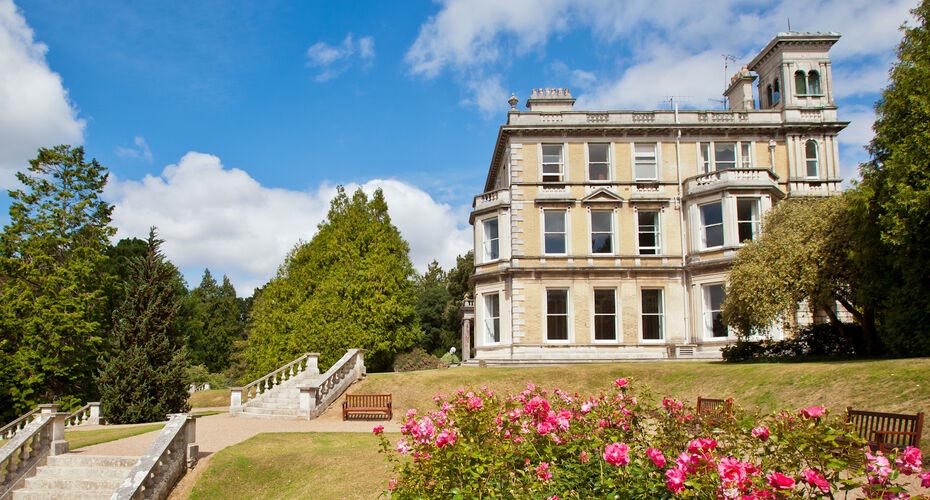
The Summer School will be hosted at Reed Hall, the University of Exeter’s historic Grade II listed Italianate mansion, surrounded by landscaped botanical gardens. The venue offers a focused academic setting, natural light in the main rooms, and immediate access to outdoor areas for discussion, networking, and informal technical exchange. The historic character of Reed Hall adds a distinctive feature to the event, while standard venue services, including porter and cleaning support, will ensure smooth delivery throughout the three days.
Programme
| Time | Saturday 25 July | Sunday 26 July | Monday 27 July |
|---|---|---|---|
| 9:00 - 9:30 | Arrival, tea and coffee | Arrival, tea and coffee | Arrival, tea and coffee |
| 09:30 - 10:45 | Talk 1 — Prof Andrzej Bartoszewicz Intuitive Intro to Sliding Mode |
Talk 5 — Prof Christopher Edwards Implementation and Testing of Sliding Mode FDI/FTC Schemes for Civil Aircraft |
Talk 9 — Prof Antonella Ferrara Constrained Higher Order Sliding Mode Control |
| 10:45 - 11:15 | Coffee break/ Networking | Coffee break/ Networking | Coffee break/ Networking |
| 11:15 - 12:30 | Talk 2 — Prof Leonid Fridman Sliding Mode: State of the Art, Part 1 |
Talk 6 — Prof Christopher Edwards Sliding Mode Schemes for Environmental Monitoring |
Talk 10 — Prof Antonella Ferrara-Sliding Mode Control in Robotics |
| 12:30 - 13:30 | Lunch | Lunch | Lunch |
| 13:30 - 14:45 | Talk 3 — Prof Leonid Fridman Sliding Mode: State of the Art, Part 2 |
Talk 7 — Dr Gianmario Rinaldi- Sliding Mode Observers, Estimation and Fault Detection in Modern Power Systems | Student presentations, Part 1 |
| 14:45 - 15:15 | Coffee break/ Networking | Coffee break/ Networking |
Coffee break/ Networking |
| 15:15 -16:30 |
Talk 4 — Prof Andrzej Bartoszewicz Sliding Mode Control for Discrete-Time Systems |
Talk 8 — Dr Gianmario Rinaldi- Sliding Mode Control in Power Converters, Microgrids and Clean Transportation |
Student presentations, Part 2 |
| 16:30 - 17:00 | N/A | N/A |
Farewell drink |
The programme is structured around three linked themes:
-
Sliding Mode Theory
This theme will introduce the mathematical foundations of sliding mode control and variable structure systems, while also covering recent advances in the field. Topics will include robustness to matched uncertainty, finite-time convergence, reaching laws, higher-order sliding modes, continuous and discrete-time implementations, quasi-sliding modes, sliding mode observation, and methods for reducing chattering. The technical relevance lies in helping participants understand both the theoretical strength of sliding mode control and the practical issues that arise when these methods are implemented in real systems.
-
Sliding Mode Applications for a Changing World
This theme will show how sliding mode methods can address current engineering and societal challenges where uncertainty, disturbances, safety, and reliability are central concerns. Examples may include autonomous systems, robotics, automotive control, road traffic systems, smart mobility, fault detection, fault reconstruction, fault-tolerant control, and resilient infrastructure. The relevance is to demonstrate how sliding mode control can provide robust solutions for complex, uncertain, and safety-critical systems.
-
Sliding Mode Applications in the Energy Sector
This theme will focus on the role of sliding mode control in clean energy and decarbonisation technologies. It will cover examples related to power electronic converters, electric and hybrid vehicles, hydrogen and battery systems, DC microgrids, clean propulsion, renewable energy integration, and resilient power systems. Attention will be given to systems characterised by strong nonlinearities, switching behaviour, uncertain loads, constrained operation, and fast transient dynamics. The technical relevance is clear: these are precisely the conditions under which robust nonlinear control methods can offer advantages over conventional linear or purely model-based approaches.
Across the three days, participants will attend 10 technical lectures delivered by internationally recognised experts in sliding mode control and its applications. The lectures will combine theory, implementation guidance, and application-led case studies. The programme will therefore expose participants to the full pathway from mathematical formulation to practical deployment, including controller design, observer design, robustness analysis, digital implementation, chattering mitigation, and validation on engineering systems.
Each lecture will be followed by extended Q&A and discussion sessions, allowing participants to test their understanding, relate the material to their own research, and engage directly with current technical challenges in the field. The format is designed not only to deliver advanced training, but also to build a research community around sliding mode control and its contribution to robust, resilient, and sustainable engineering system.
The Summer School will conclude with a student presentation session, giving participants the opportunity to present their own research in a supportive technical environment. These short presentations will allow students to explain their research problems, methodological approaches, and current challenges, while receiving feedback from peers and senior researchers in the sliding mode control community. The session will also help participants connect the material covered during the School with their own work, for example in nonlinear control, observation, fault-tolerant control, energy systems, robotics, automotive systems, or power electronics. This final event will strengthen the interactive nature of the programme and encourage longer-term collaboration among the participants.
Students Presentation - Monday 27 July Afternoon:
Students will be invited to present their research activities during the Monday afternoon session. Each talk should be delivered within five minutes, followed by three minutes of discussion.
The presentation schedule will be circulated to students by Friday 24 July. Slides are welcome and should be emailed to the PhD School Organiser at least one day in advance, by Sunday 26 July.